
A World In Chaos: How Irish Bands Are Responding To It
Historically, music has been an outlet of expression for personal beliefs and attitudes. From the politically charged aspects of ska resistance to the blatant political critique of the Russian ‘Pussy Riot’, music has always played a role in protest to perform a certain ideology. One genre that has always held a close relationship between its music and its commentary is punk. In recent years, we have seen an explosive reactionary increase in these bands in the scene surrounding us, with a post-punk revival leading the biggest artists coming out of Ireland currently. However, is there a link between the rise of post-punk artists and the state of our current geo-political climate?
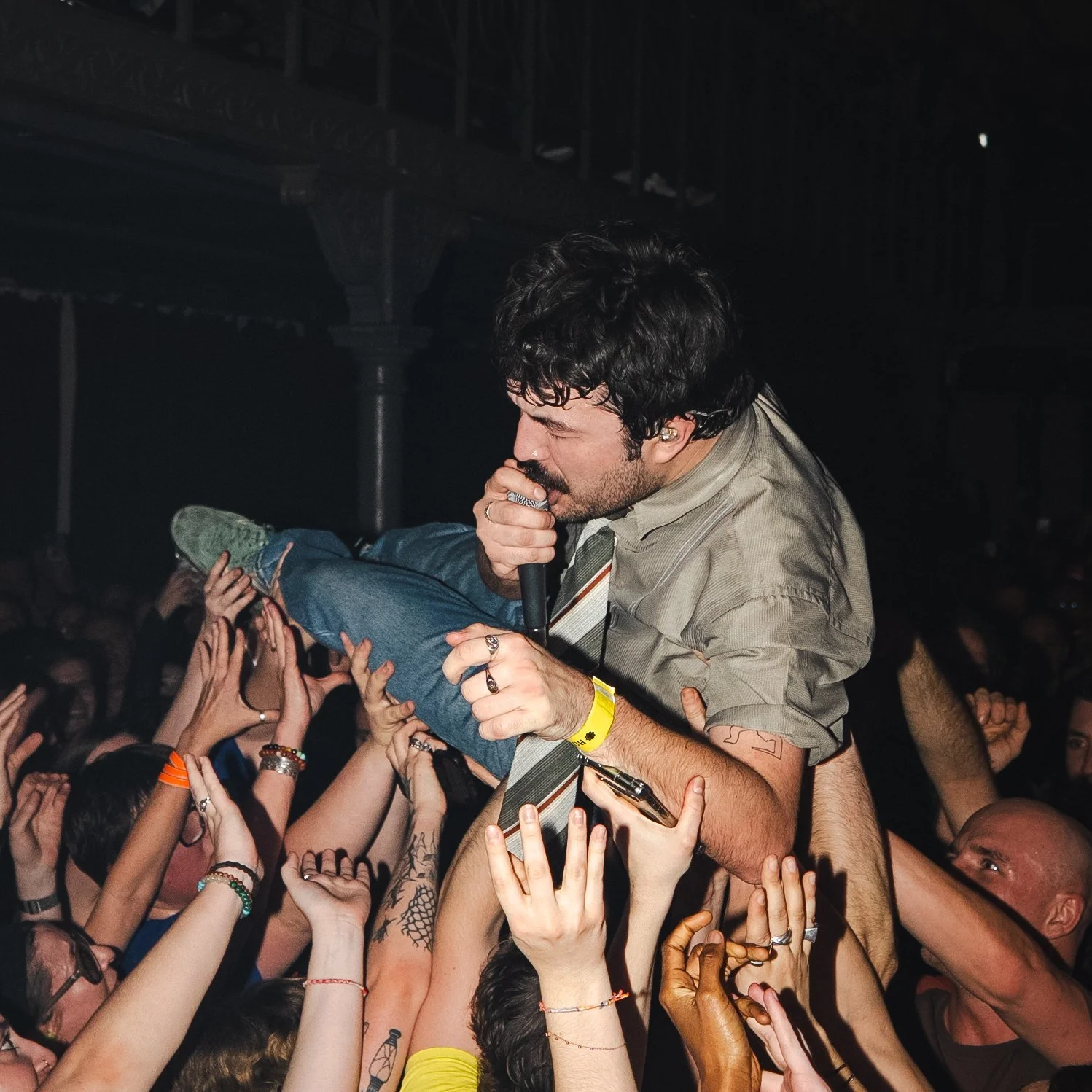
Credit: Lily Hiddadi
Irish music has always been created with undertones of political and social commentary, it being impossible not to do so while identifying with the country. During the initial rise of punk, where bands like The Clash and Sex Pistols fronted the scene, a message always followed closely behind the music. These bands, however, share a key component; they’re English. Although sharing similar messages to those of Irish punk bands like Stiff Little Fingers, coming from a country with such a fraught relationship with nationalism and colonialism completely changes the charged nature of the message of their music. Coming from a country historically rife with conservative Catholic values, it can be difficult to create music so outwardly critical of the issues these values create and their long-standing effect; however, the Irish punk and post-punk genre created an atmosphere for artists to channel the frustrations of their experience into a powerful expression of art.
All bands radiate a shared confrontational energy that resonates with any punk/post-punk band, but with the roots of their message grounded in a distinct Irish experience. Current years have lent a political unease to the Irish people overall, with coalition politics dominating, a housing and cost-of-living crisis, a horrifying rise in right-wing ideology and varying attitudes towards Irish language rights. As issues are so deeply tied to identity, especially that of Irish nationalistic attitudes, it would be impossible to separate such issues from the expressive style of their music. Emotional detachment and economic stagnation are themes Fontaines DC have never shied away from. As an early fan, the commentary used in their lyrics was always something that stood out to me: a strong sense of Irish pride, but with the honesty of sometimes not feeling proud of the history that surrounds us. Intimacy is felt deeply in songs like “I Love You”, reading like a conflicted love letter to Ireland itself. The song is a description of the comorbid tension of attachment and disenchantment that closely mirrors that of many people’s relationship with the Irish state. The personification of an entire country challenges the ideals of romanticism in Irish nationalism; instead, it is felt as an emotional exhaustion. The raw rejection of blind pride is understood, with lyrics such as “I had to be there from the start; I had to be the fucking man” emphasising the emotional unease felt by the pressure of masculine values in a modern Ireland. The echoing and pleading to the disillusioned post-independent Ireland that, although socially liberalised on paper, still struggles to house its own inhabitants. This, to me, seems like a blatant resistance to current political affairs, with the band showing the delicate balance between being proud of the country that raised you while simultaneously recognising its downfalls, an idea that post-punk creates a perfect atmosphere to house.

Credit: Anna Burnett
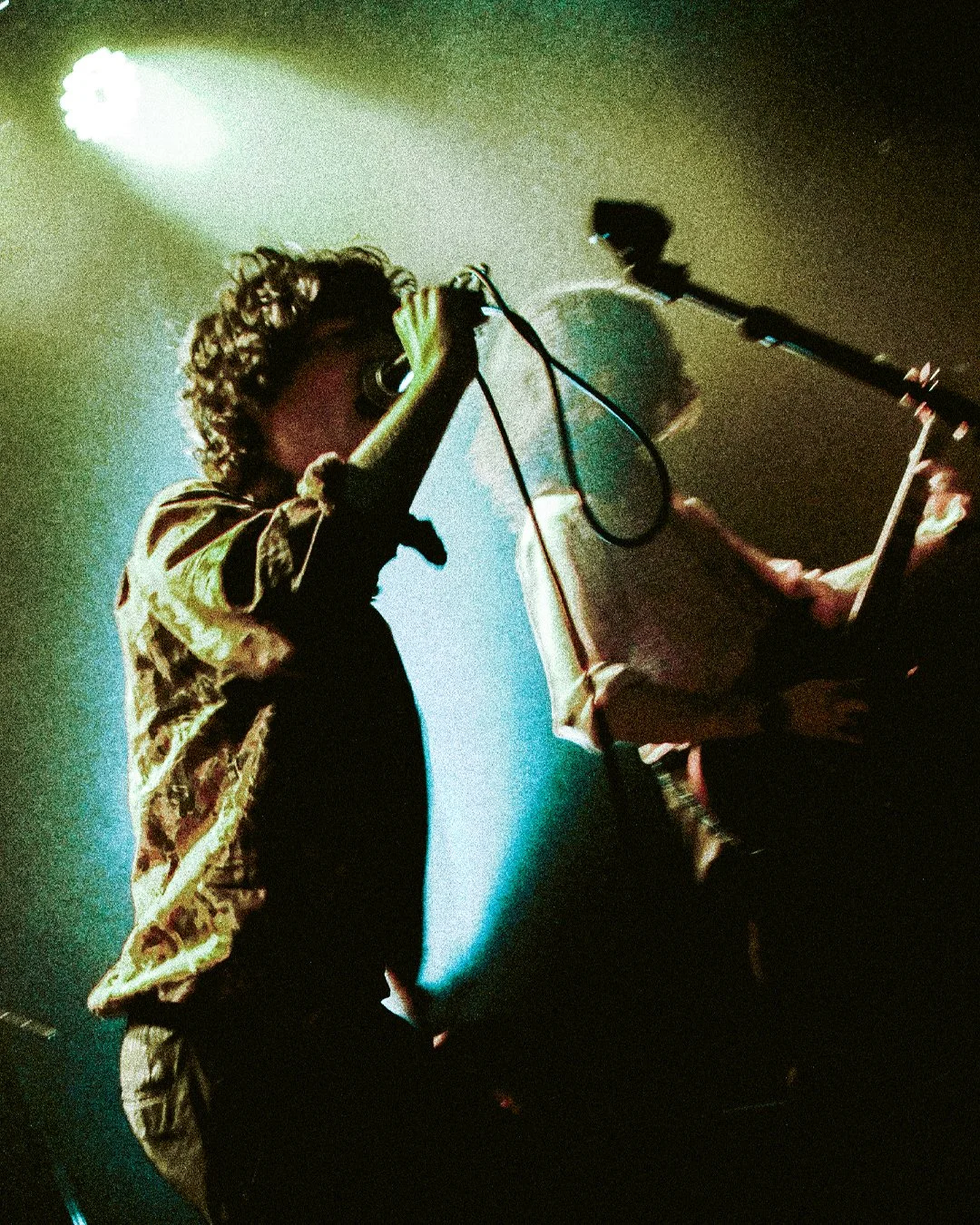
Although sometimes, the social commentary within Irish music is felt more deeply through attitudes and performance than the lyrics themselves. Bands like Gurriers and Sprints use live shows that drip with emotional immediacy as comments on the raw frustration felt by the political inaction of our government and the anger that the responsibility lies on the shoulders of our youth. The direct and blazing lyrics of both artists are borderline accusatory, explicitly confronting the audience with topics of state neglect, Irish capitalism and gender politics. The speed of the songs, the vibrant distortion of the guitars, and the shouting of the vocals all create a dynamic to portray agitation towards the politics of the world around us. In 2024, both bands pulled out of the SXSW festival in solidarity with Palestine. By boycotting the festival and using their platforms to speak outwardly, condemning the festival for its link to the US military, they show themselves as powerful tools of resistance. Both artists use their platforms to support their ideologies, using any chance available to bring awareness and attention to the geopolitical instability in our world. At Glastonbury 2025, Sprints utilised their performance to display “Free Palestine” on the screens of their stage to highlight the injustice of the Palestinian people and their rights. Similarly, The Murder Capital cancelled their Berlin gig after the venue refused to let them fly the Palestinian flag on stage, stating, “This isn’t just a political statement; it’s a humanitarian statement.” As semi-new bands, taking a public stance could lead to more consequences in comparison to much larger artists, so using a festival slot at Glastonbury or cancelling an entire gig abroad to publicly display support shows their huge sense of integrity over convenience. It emphasises the “punk attitude” of being guided by their values and morals, not career safety. This is a notion distinctly ‘punk’ that I believe can only be applauded. All bands also show a strong sense of camaraderie with fellow Irish artists who are openly opposing the genocide, supporting and lifting other bands up on their social media platforms to demonstrate their alliance and comfort sharing stages with bands who feel similarly.
Credit: Beau
Bands local to the Belfast and Northern Ireland scene have also displayed the link between music and politics. Post-punk-influenced bands like Madam’s Last Discovery and Chalk have taken strong moves to openly oppose the genocide in Gaza and publicly support the people of Palestine. Madams Last Discovery headlined the local venue, Ulster Sports Club, and donated all of their merchandise sales towards medical aid for the Palestinian people, and Chalk are among some of the multiple bands that also pulled out of SXSW festival; stating the festival’s decision to align themselves with the facilitation of genocide “is something that we as a band, and as people, just cannot accept.” Overall, these public displays of support are resistance against the oppressions faced due to the instability of our war-plagued world. As a country with such deeply rooted experience in oppression, colonialism and political control, we hold an obligation to comment on the world surrounding us, and the pushback emotional defiance seen in the rise of post-punk music is not just a response but a responsibility; the rawness of its sound and refusal to conform offer solidarity where political figures fail. This channelling of anger into expression reaffirms music as an enduring role of resistance that, instead of seeking easy solutions, bears witness and gives a voice to those silenced by political unrest.